When air conditioning stops performing, the quickest route to a dependable repair is usually a clear diagnosis. The same symptom can have several causes: poor airflow, a control issue, a drainage problem or a fault within the equipment. Good fault finding works from evidence rather than replacing parts on a guess.
Start with the story of the fault
An engineer will want to know what changed, when it changed and which spaces are affected. Did the problem arrive suddenly or build up over time? Is one indoor unit involved or an entire system? Has a controller shown a code? Recent building work, changes in occupancy and previous repairs can all be useful context.
Check the simple possibilities first
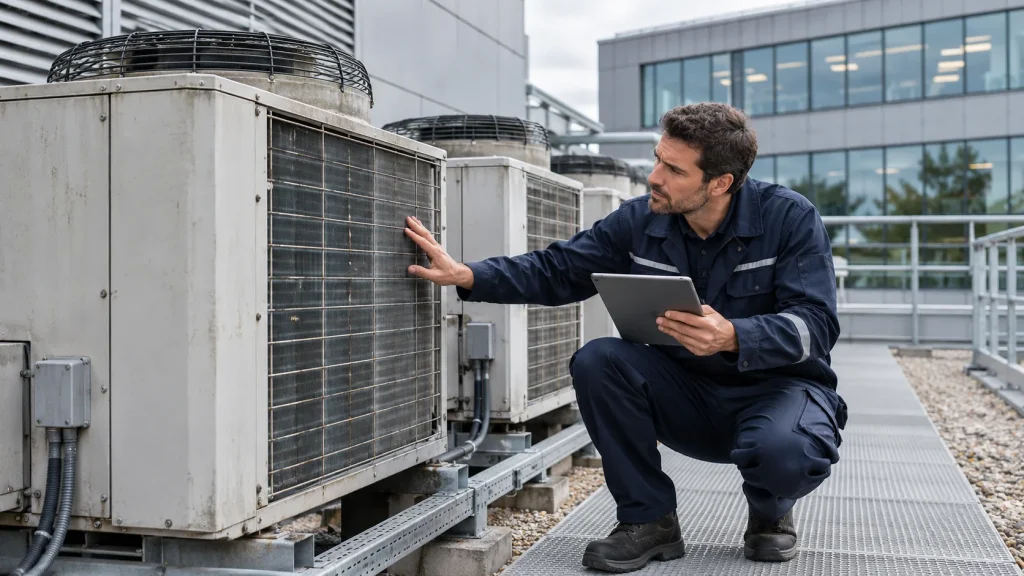
The initial review may cover operating mode, set points, schedules, visible obstruction and the condition of accessible filters or outlets. This is not about assuming a simple answer; it is a sensible way to avoid overlooking one. The exact checks depend on the installation and manufacturer instructions.
Use readings and fault history
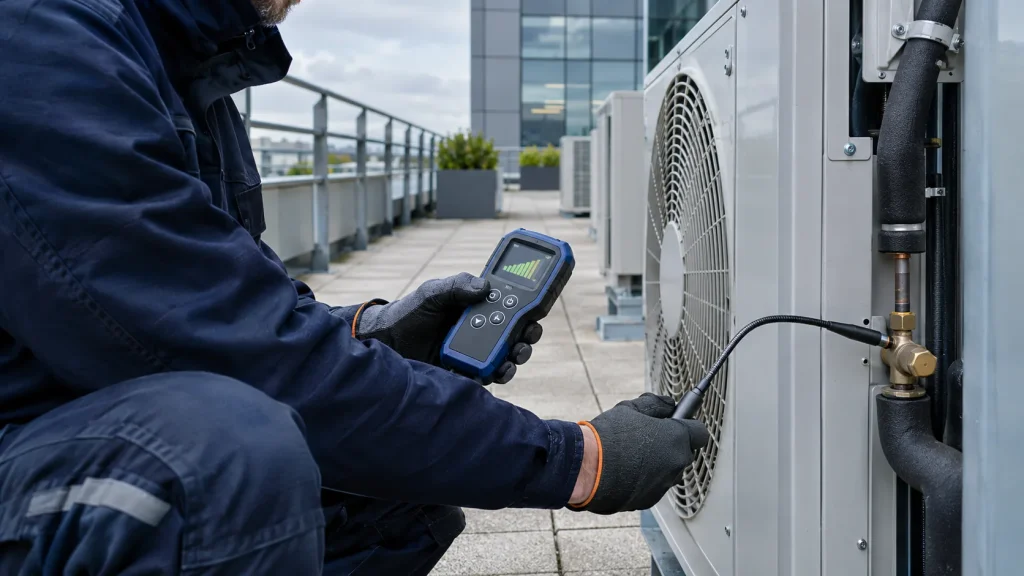
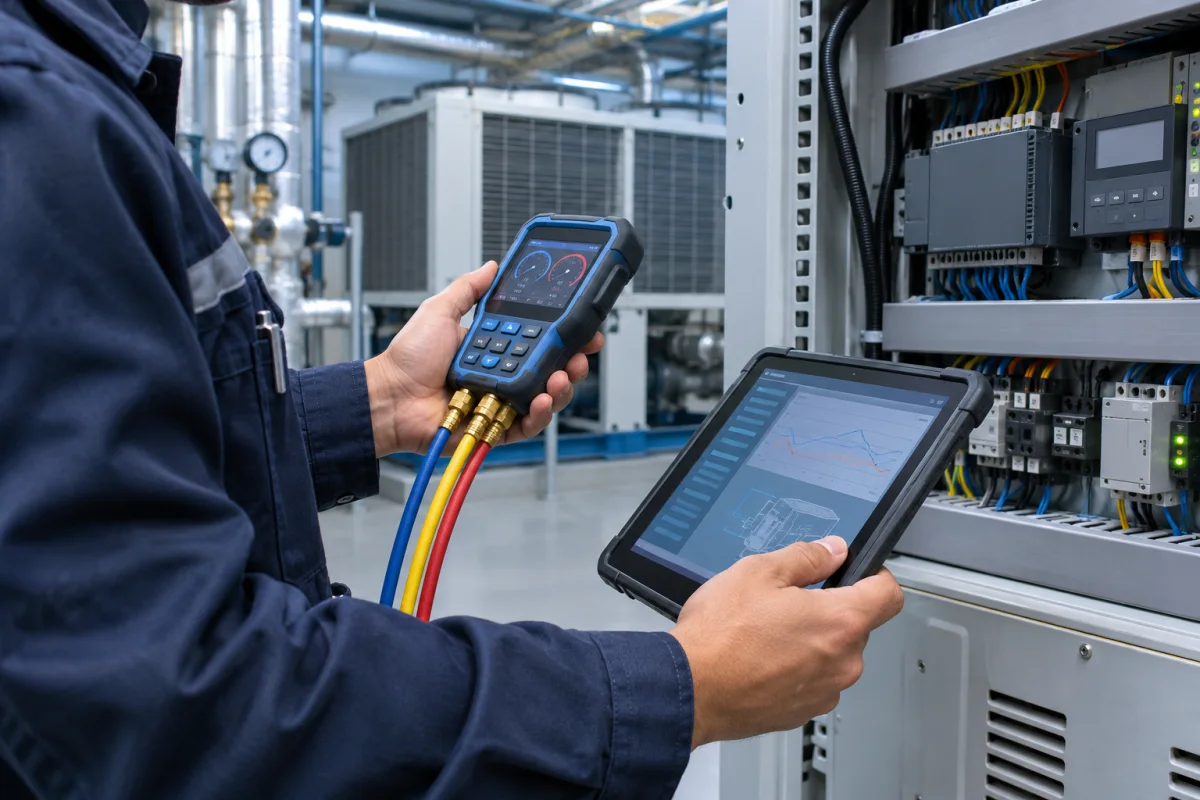
Where the first checks do not explain the issue, a qualified engineer can examine fault history and make appropriate electrical, airflow and system measurements. A reading is most useful when compared with the equipment’s expected operation and the conditions on site. Fault codes are clues, not a complete diagnosis on their own.
Agree the next step
A clear diagnosis should lead to a practical explanation: what has been found, whether the system can continue operating safely, what repair is proposed and whether further testing is needed. For older equipment, the discussion may include repair options and the likely value of replacement.
Do not remove covers, handle electrical components or disturb refrigerant pipework to investigate a fault yourself. If you can provide the unit model, error code and a brief symptom history, RR Cooling can help plan the next step.
Back to all insights