
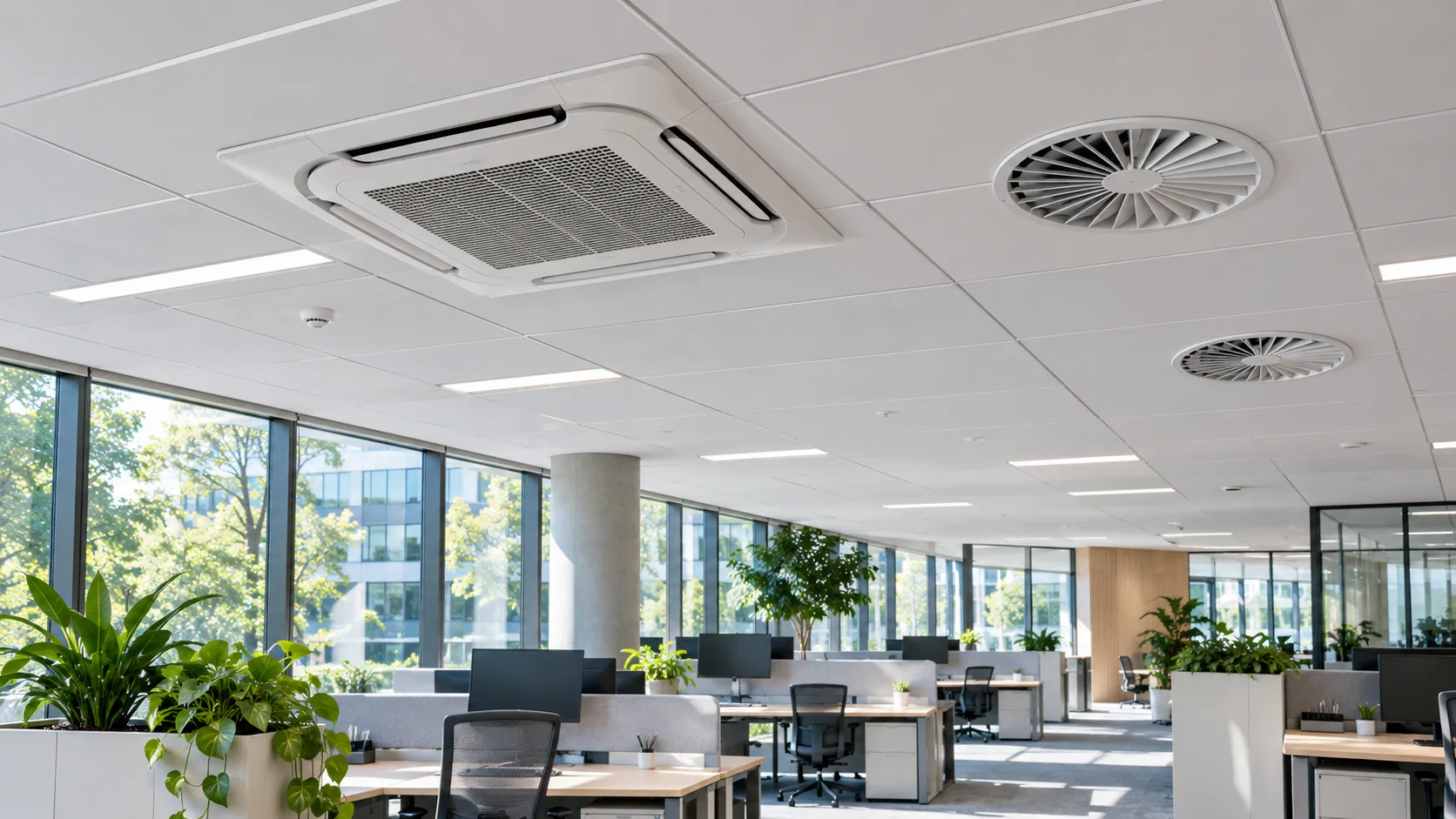
“The room feels cool, so the air must be fresh” is an easy assumption to make. Air conditioning and ventilation can work together, but they are not the same job. Air conditioning is used to control indoor temperature. Ventilation brings outdoor air into a workplace and removes indoor air. Understanding both helps a building manager respond to comfort complaints without overlooking a stuffy room.
Cooling does not always bring in fresh air
Many air conditioning units recirculate room air as they cool or heat it. Some larger building systems combine cooling with a planned fresh-air supply, but the presence of an indoor unit does not prove that fresh air is being provided. The Health and Safety Executive (HSE) describes workplace ventilation as bringing in fresh air from outside and removing indoor air.
This distinction matters when a space is refurbished or its occupancy changes. A new cooling unit may improve the temperature while the ventilation arrangement still needs a separate review.
What to notice on site
Rooms that feel persistently stuffy, vents that have been blocked, or a meeting room that becomes uncomfortable when full can all justify a closer look. Ask how outdoor air enters the space: through opening windows, dedicated vents or a mechanical system. Check that fresh-air inlets have not been closed for convenience and that the ventilation system’s operating schedule suits the people using the room.
HSE guidance notes that recirculated air should be adequately filtered and have fresh air added before it is reintroduced into the workplace. Its practical ventilation guide also suggests checking that fresh-air inlets on mechanical systems are open.
Temperature complaints can have more than one cause
A warm room might need attention to cooling capacity, airflow, solar gain or controls. A room can also be at a comfortable temperature and still feel stale because of poor ventilation. Logging when complaints occur, how many people are present and which systems are operating helps separate those questions.
Opening windows may provide fresh air in some settings, but it may conflict with the cooling strategy or be unsuitable because of noise, security or the room’s use. A building-specific assessment is more helpful than assuming one fix will work everywhere.
Plan the systems together
When installing or altering air conditioning, tell the contractor about existing ventilation, planned occupancy and any rooms that change use during the day. Cooling and fresh-air provision should be considered together so the finished space is comfortable and appropriately ventilated. If the ventilation arrangement is unclear, a ventilation engineer can assess it.
RR Cooling can discuss the air conditioning side of your project and work around the needs of your site. Send us the details for a free quotation.
Back to all insights