
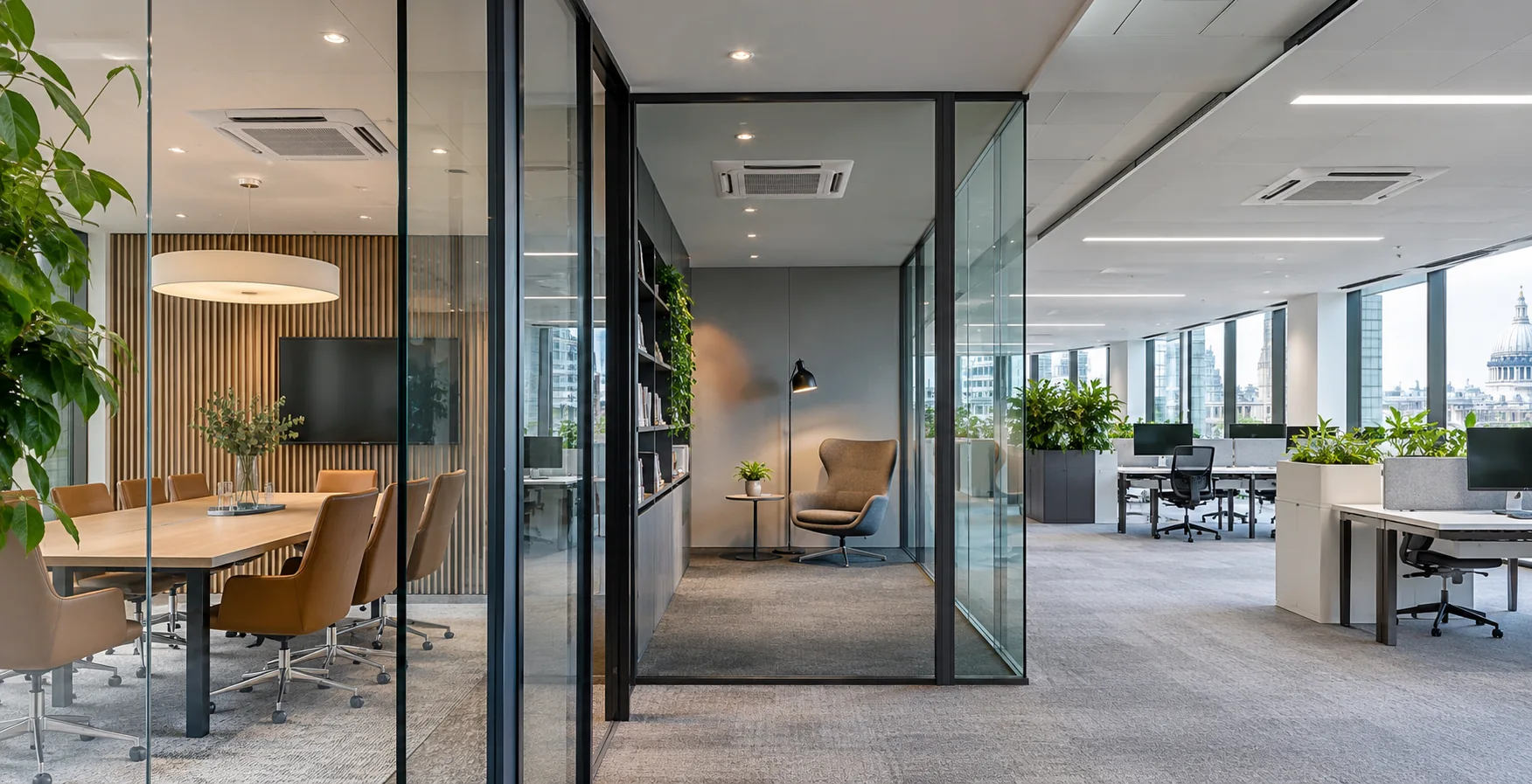
A building rarely behaves as one room. A sunny meeting room, a busy reception and a quiet back office can need different conditions at the same time. Zoning gives those areas a way to be controlled separately, so one setting does not have to serve every space. The useful question is not simply how many zones a system offers, but whether they match the way the building actually works.
Start with different patterns of use
Walk through the site over a typical week. Which rooms are occupied all day, and which are used only for meetings? Do parts of the building operate outside normal office hours? Where do computers, kitchens, glazing or other heat sources change the load? These details help define sensible zones before equipment is selected.
If several rooms share one control but have different schedules or exposure to sun, it can be difficult to keep everyone comfortable. The answer may be separate indoor units, different controls or a review of the existing system’s settings. The right arrangement depends on the installed equipment and the site.
Give people control without creating confusion
A good control plan makes it clear who may change a room setting, which areas are linked and what happens outside occupied hours. Too many unexplained controllers can be as frustrating as one central control that nobody can adjust. A simple handover should cover the normal operating schedule, how to request a change and when to report a fault.
Multi-zone systems can provide individual room or floor control. Daikin’s overview of VRV systems shows how one commercial system can manage different zones. That does not mean every building needs VRV: smaller sites may be well served by simpler arrangements.
Match schedules to the working day
Controls can be set around actual occupancy rather than running every area on the same timetable. Before changing schedules, check cleaning hours, evening teams, weekend use and any rooms with equipment that needs a stable environment. A change intended to reduce unnecessary operation should not leave an occupied area uncomfortable.
When a business moves teams or changes a room’s purpose, revisit the settings. The US Department of Energy’s operations guide recommends reviewing occupancy patterns, space layouts and schedules as part of HVAC management.
Use complaints as useful evidence
Repeated hot and cold complaints can reveal a zoning problem, but they can also point to airflow, sensor position or an equipment fault. Note the room, time, weather, occupancy and controller setting when an issue appears. That record gives an engineer a better starting point than “the office is always too warm”.
If your building has uneven comfort or its layout has changed, ask RR Cooling to review your air conditioning and provide a free quotation for any work needed.
Back to all insights