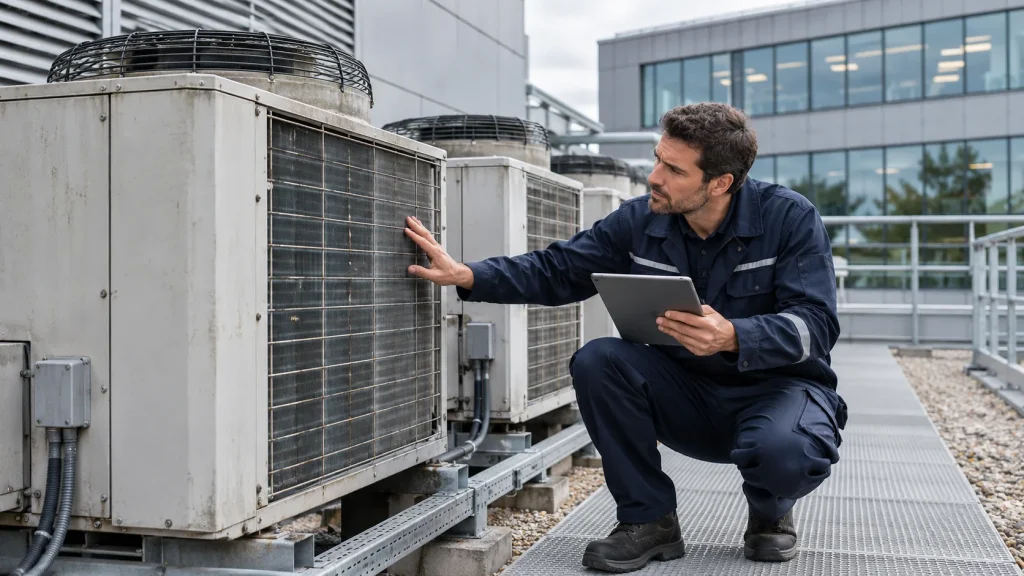
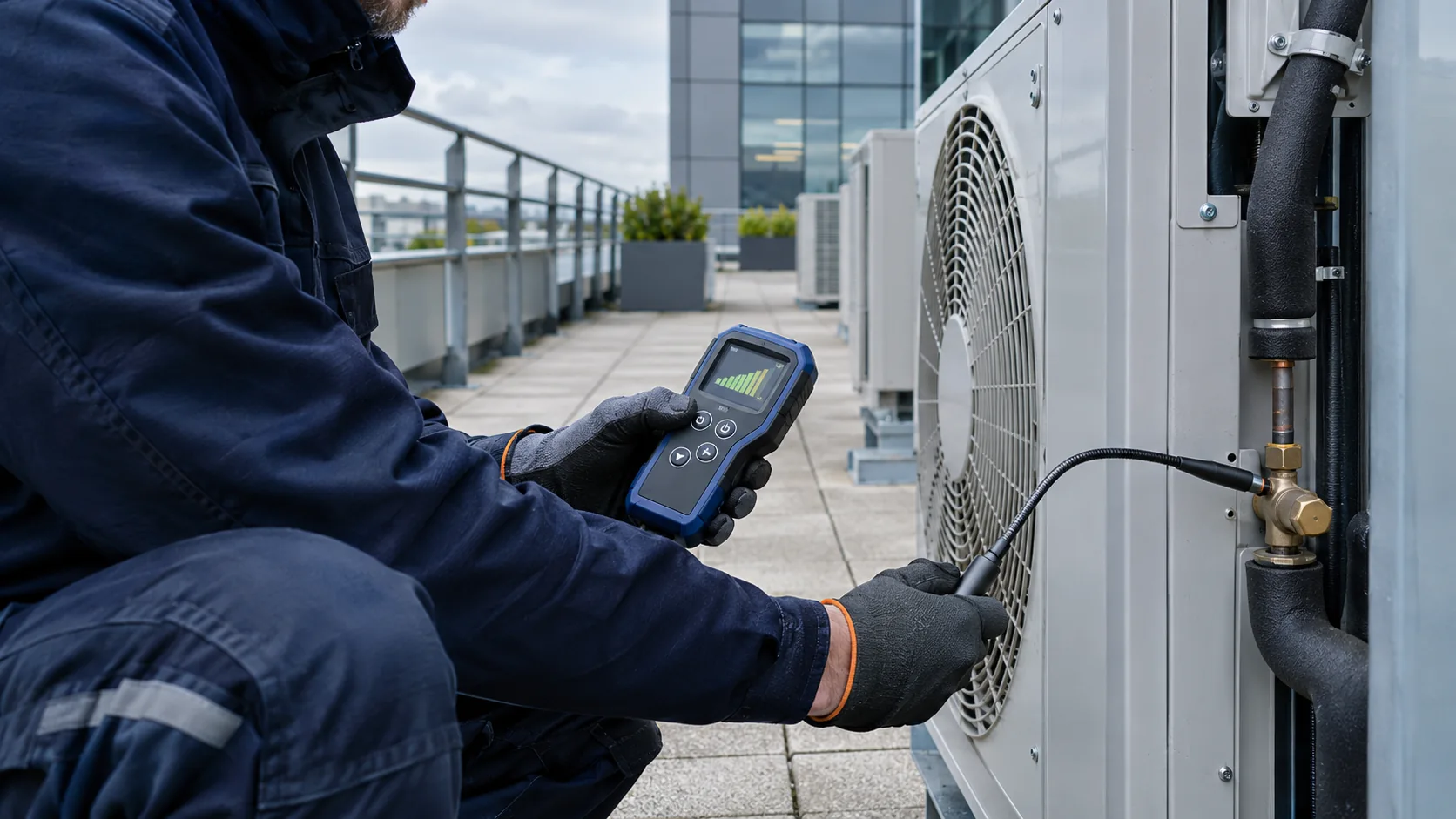
A cooling system can appear to run normally while a refrigerant leak is developing. For a building manager, the useful first step is to identify the equipment, record what has changed and arrange the right professional assessment. Refrigerant pipework and electrical components are not suitable for a quick on-site investigation by unqualified staff.
Know which equipment you are responsible for
Find the model, location and refrigerant details for each air conditioning or refrigeration system. A plant register, equipment label and previous service reports can help. Some systems containing fluorinated greenhouse gases, known as F-gases, are subject to mandatory leak checks. The requirements depend on the refrigerant, its quantity and the equipment. The government’s F-gas leak-check guidance explains how those factors affect an operator’s responsibilities.
Record symptoms without guessing the cause
Reduced cooling, repeated faults or a system running longer than usual can prompt a service request, but none of these proves a refrigerant leak. Airflow restrictions, controls and other faults may produce similar symptoms. Note which rooms are affected, when the problem occurs, any controller code and what the system was doing at the time. Photos of accessible labels or displays can help an engineer identify the equipment before arriving.
Keep people away from damaged equipment or an area you believe may be unsafe, and follow the site’s incident procedure. Do not open a unit, disconnect pipework or add refrigerant to see whether performance improves.
Arrange an appropriate leak assessment
A qualified engineer can work through the symptoms, examine the system and decide what testing is appropriate. For F-gas equipment, the government sets out qualifications for the work involved. A business servicing someone else’s stationary air conditioning or refrigeration equipment must also hold the relevant company certification. A suspected leak should lead to a diagnosis and a repair plan, rather than an assumption that a top-up will solve the problem.
Keep the repair and system records together
Ask for a clear report showing what was found, what work was completed and whether a further check is needed. Government guidance says a confirmed F-gas leak must be repaired as soon as possible and checked again within a month to confirm the repair worked. The exact record-keeping duties depend on the system’s F-gas charge; the official record-keeping guidance sets out when they apply and what to retain. Even where a particular record is not mandatory, a reliable service history helps the next engineer understand recurring issues.
Make the next visit more productive
Send the engineer the unit location, model details, recent fault history and safe access arrangements. If the equipment serves a critical area, explain what operations depend on it and when access is possible. That information helps the visit focus on both the fault and the practical needs of the building. If you are concerned about a possible refrigerant leak, send RR Cooling the site details for a free quotation and an appropriate next step.
Back to all insights